
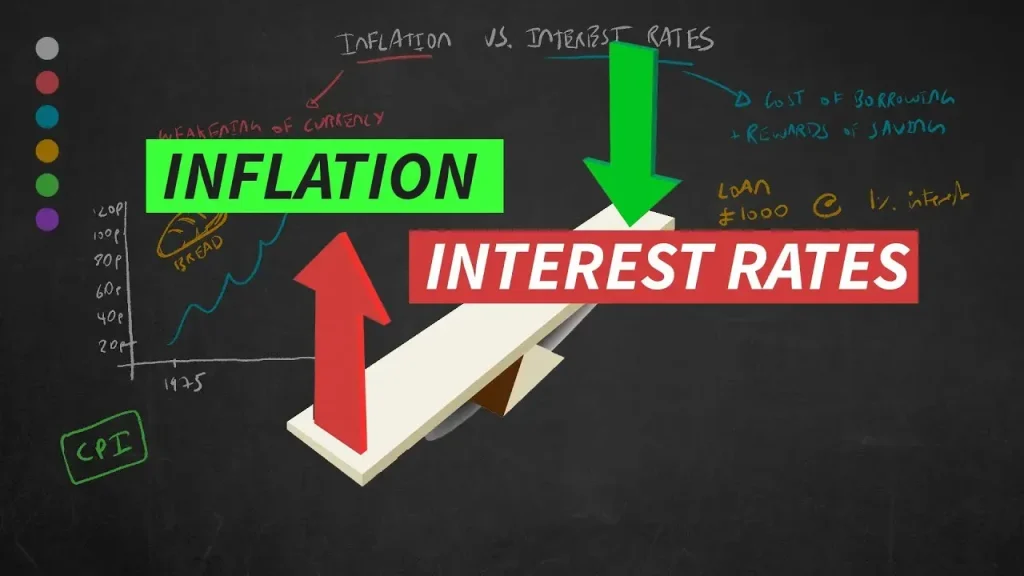
Inflation and Interest Rates are the weather and the wind shaping every economic decision, from family budgets to corporate expansion. When inflation accelerates, prices rise for goods and services across the board. When central banks respond by adjusting policy rates, borrowing costs shift, influencing consumer spending and business investment. The inflation outlook and central bank policy together help explain how markets move and how headlines translate into real-world decisions. By understanding the link between Inflation and Interest Rates and the market reactions to inflation and rate changes, readers can better interpret momentum in assets and the interest rate impact on borrowing costs.
From a policy lens, rising price pressures and tightening monetary conditions push borrowing costs higher and reshape investor expectations. As price growth accelerates, central banks adjust their policy stance, influencing lending costs, credit availability, and how markets value equities and bonds. Markets respond to new macro signals—earnings forecasts, wage data, and supply chain resilience—shaping asset prices and currency flows. Understanding how price pressures and lending terms interact helps readers read business news, anticipate market moves, and gauge risk across regions. In practical terms, traders and households should track the trajectory of inflation risks, the cost of capital, and policy commentary to map potential outcomes.
1) Inflation and Interest Rates: How They Shape Monetary Policy and Market Trajectories
Inflation and Interest Rates are intertwined in a way that steering monetary policy and shaping market expectations go hand in hand. When inflation accelerates, central banks typically raise policy rates to cool demand and prevent overheating, which in turn raises borrowing costs for households and businesses. This chain reaction can slow consumer spending, cool investment, and influence asset valuations across equities, bonds, and currencies. Understanding this dynamic helps readers interpret headlines and anticipate how markets might reprices risk assets as the monetary landscape evolves.
The path from policy action to market response is not immediate; there is a lag as economic activity adjusts and expectations shift. Investors watch this lag closely, since asset prices often begin discounting the impact of rate changes before the full effects are felt in the economy. By examining how inflation interacts with policy rates, readers can better gauge the likely direction of market moves and calibrate expectations for earnings, cash flow, and asset valuations.
2) The Inflation Outlook and Central Bank Policy: Signals That Guide Markets
The inflation outlook, including core inflation trends, supply-chain normalization, energy prices, and wage dynamics, shapes how aggressively central banks respond. If the inflation outlook suggests persistence—higher and stickier prices—the path of policy rates may be more aggressive. Conversely, if inflation appears transitory or declines more rapidly than expected, rate cuts or a more cautious approach could follow. In either case, the link between inflation data and rate expectations remains the primary driver of volatility in financial markets.
This outlook also informs central bank policy communications and the implied path of rate moves visible in futures markets. Market participants parse statements, minutes, and forward guidance to assess where policy is headed, how quickly balance sheets might be reduced, and when normalization could occur. Investors who align their portfolios with the inflation outlook and anticipated policy trajectory can better manage risk and capture potential upside in a shifting monetary environment.
3) Market Reactions to Inflation Data and Rate Policy: Distinguishing Noise from Fundamentals
Markets price in new information about Inflation and Interest Rates almost continuously. When inflation prints stronger than expected, equities may wobble as investors reassess growth prospects and earnings margins, while bond markets adjust yields to reflect a changed path for rates. Currency markets can also react, as higher domestic rates attract capital, influencing import/export dynamics and relative competitiveness. This cascade of responses highlights the importance of distinguishing short-term volatility from longer-run fundamentals in earnings, cash flow, and valuations.
Because inflation outlooks and rate paths can diverge across regions, market reactions are not uniform. Some economies experience broad-based inflation and aggressive tightening, while others see more cyclical, transitory pressures and a more nuanced policy response. Central bank communications often become a focal point, with language around normalization and balance sheet management signaling how aggressively inflation will be tackled in the coming quarters.
4) Sector and Company Implications Under Higher Rates
Some sectors are more sensitive to Inflation and Interest Rates than others. Real estate, consumer finance, and durable goods often feel the impact of higher borrowing costs quickly, as mortgages, car loans, and business financing become more expensive. The inflation outlook can influence pricing strategies and demand for these sectors, while utilities and other rate-sensitive equities may underperform when rates rise. Understanding the interest rate impact helps investors anticipate sector rotation and adjust exposure accordingly.
The relationship between inflation and rates also affects earnings quality. Rising rates can compress the present value of future cash flows, potentially lowering stock valuations if discount rates rise. On the flip side, certain financials—like banks—may benefit from steeper yield curves and higher net interest margins when rates advance. This nuanced landscape explains why business news often highlights differences in sector performance as Inflation and Interest Rates shift across markets.
5) Global Perspectives and Cross-Border Considerations
Inflation and interest rate dynamics are not contained within a single country; global markets are connected through capital flows, trade, and synchronized or divergent policy cycles. When major economies raise rates, currency moves and capital reallocation can ripple worldwide, influencing global earnings and risk sentiment. Conversely, regional variations in inflation trajectories create opportunities and risks for multinational companies and investors as FX shifts and cross-border demand evolve.
Forecasting the path of Inflation and Interest Rates requires weighing a wide set of data points—from inflation reports and wage momentum to consumer spending and central bank communications. Investors routinely monitor the inflation outlook, central bank policy signals, and implied rate paths in futures markets to anticipate how business news and market commentary will evolve in the months ahead, including potential spillovers to supply chains and cross-border investment decisions.
6) Practical Takeaways for Investors in a Changing Monetary Landscape
Monitor the inflation outlook and watch how price pressures evolve across goods and services, paying attention to wage dynamics and input-cost trends. Keeping an eye on central bank policy signals—minutes, press conferences, and communications—helps translate rate expectations into informed portfolio decisions and risk management.
Assess the interest rate impact on borrowing costs and debt strategies, including mortgage rates, corporate financing, and refinancing plans. In addition, consider asset allocation choices—equities, fixed income, and alternatives—through a lens of inflation and rate expectations, using diversification and disciplined rebalancing to navigate volatility and align with a forward-looking view of market reactions to inflation and policy changes.
Frequently Asked Questions
How does the inflation outlook influence central bank policy and interest rate decisions?
The inflation outlook helps determine how aggressively central banks tighten or ease policy. A persistent, higher inflation outlook tends to push policy rates higher, increasing the interest rate impact on borrowing costs for households and businesses. If the outlook softens, central banks may slow the pace of tightening or even cut rates. Investors watch the inflation outlook and central bank policy to gauge likely rate moves, which can drive volatility in equities, bonds, and currencies.
What is the link between Inflation and Interest Rates and market reactions to inflation?
Inflation data drives expectations for the path of interest rates. When inflation surprises to the upside, market reactions to inflation can include higher yields, weaker equities, and currency moves as investors reprice rate forecasts. Conversely, cooler-than-expected inflation can ease rate expectations. The connection between Inflation and Interest Rates is a key driver of market dynamics across assets.
How does the inflation outlook shape the interest rate impact on households and businesses?
A firmer inflation outlook raises the probability of higher policy rates, increasing the interest rate impact on mortgages, loans, and corporate financing. This can slow consumer spending and business investment, while keeping price pressures elevated. A softer inflation outlook reduces rate pressure and can support borrowing and growth.
Which sectors show the strongest market reactions to inflation and rate policy?
Rate-sensitive sectors like real estate, consumer finance, and durable goods may feel higher borrowing costs first. Utilities and other rate-sensitive equities may lag when rates rise, while companies with pricing power or inelastic demand can better withstand higher costs. The inflation outlook shapes sector earnings and risk, influencing market reactions to inflation and rate policy.
How do global inflation readings and divergent central bank policy affect cross-border investment and currency moves in the market?
Global inflation readings and divergent central bank policy paths create capital flows and currency volatility. Regions with faster tightening often see stronger currencies and shifting valuation dynamics for multinationals, while spillovers influence risk sentiment, earnings potential, and investment strategies across borders.
What practical steps can investors take to navigate inflation and interest rate dynamics?
Monitor the inflation outlook and central bank policy communications; assess how the interest rate impact affects debt service, cash flow, and valuations; diversify across asset classes; track rate futures to gauge policy paths; and adjust pricing power, balance sheets, and capital allocation to stay resilient amid changing monetary conditions.
| Topic | Key Points |
|---|---|
| Relationship between Inflation and Interest Rates |
|
| Market reactions to inflation data and rate policy |
|
| Sector and company implications |
|
| Global perspectives and cross-border considerations |
|
| Practical takeaways for readers and investors |
|
| A forward-looking view: what to watch in the coming quarters |
|
Summary
Table above summarizes the key points on how Inflation and Interest Rates interact with markets and business news.